TLDR. A lot — one bank funds roughly 80% of operations from earned revenue. But it took twenty-five years, it started with one truck, and it turns you into a business that runs a charity rather than a charity with a side line. That trade is worth making. It is not worth making accidentally, and it is not a grant-replacement strategy you can execute in a budget cycle.
The number, and what sits underneath it
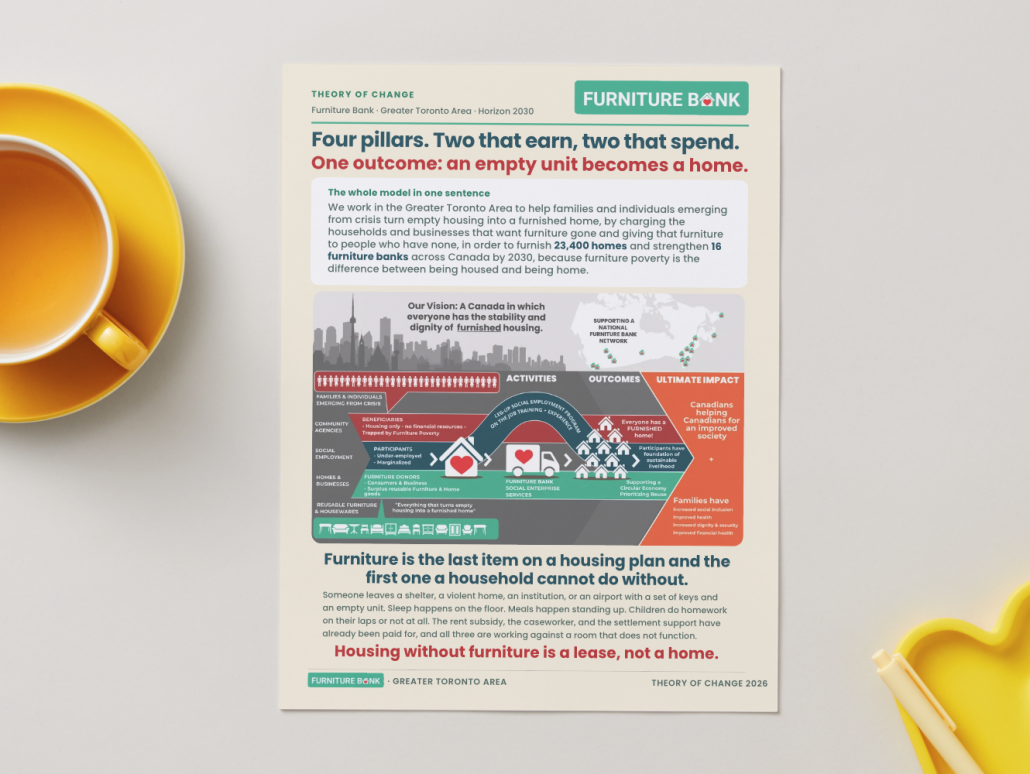
Furniture Bank in Toronto reports funding around 80% of its operations through earned revenue rather than donations and grants. In a sector where 20% earned income is considered healthy, that is an outlier, and it is the number most often quoted back at other furniture banks as a target.
It is worth understanding what produced it before adopting it as a goal.
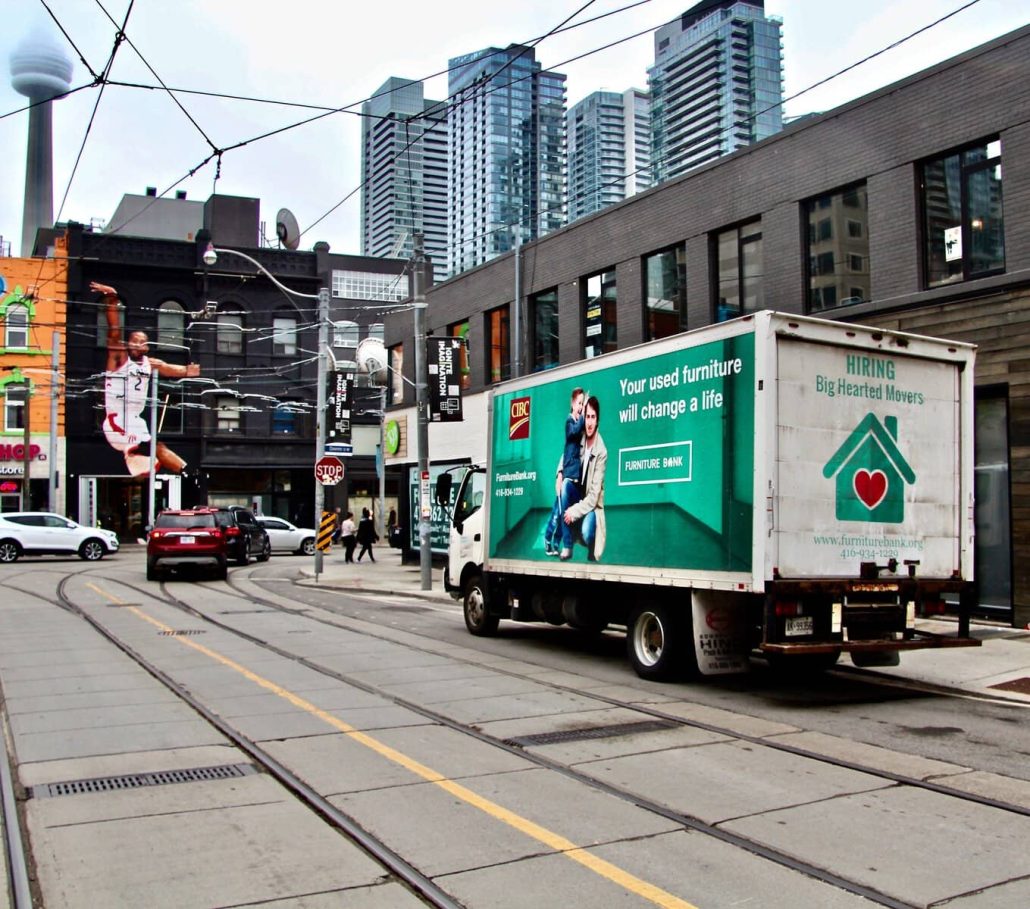
The revenue comes from charging for furniture removal — the same pickup you were doing for free, priced as a service. The insight is that a donor with a three-seat sofa on the second floor has two options: pay a junk removal company to take it to landfill, or pay you a comparable amount to take it to a family. Most people prefer the second, and a meaningful number will pay a premium for it.
That business started with a single truck and grew into a fleet over more than two decades. There is no version of this that arrives quickly.
Why it works when it works
Three things have to be true at once, and they are demanding:
- You are already doing the activity. You own trucks and crews because your mission requires them. Charging for capacity you already run is a margin question, not a new venture.
- The customer is buying the outcome, not the labour. Junk removal is a commodity. Diversion with a tax receipt and a dignity story is not. You are competing on something a commercial hauler cannot offer.
- The revenue and the mission point the same way. Every paid pickup brings inventory in. A social enterprise that competes with your mission for staff time will lose to the mission, correctly, and then fail.
That third condition is the one that disqualifies most ideas. A thrift store, a café, a rental business — each can work, but each is a separate operation with its own management demand. A priced version of the logistics you already run is not.
What it costs you
Pricing a service you have always given away changes your relationship with donors permanently. Some will be angry. You will spend years explaining that the fee buys the truck and the two people carrying the sofa down the stairs, not the furniture, which is still being given away.
You also acquire commercial obligations: quoting, scheduling, service standards, complaints, insurance, vehicle maintenance, and crews who have to hit a time window. That is a management burden most charities are not staffed for, and it competes for your executive attention with the programme work.
And there is a subtler cost. Earned revenue makes you resilient, but it also exposes you to demand cycles in a way grants do not. A soft quarter in removals is a soft quarter in operating budget, with no foundation to appeal to.
The same discipline applies to partnerships
Earned revenue is not the only thing that looks like money and behaves like an operating commitment. A national retailer agreement can deliver millions in in-kind inventory and still leave you carrying more than half the programme cost — one such agreement covered 45% of costs, with the charity funding the remaining 55%.
The test is the same in both cases. Model the full cost, including the administration, before you commit to the term. Revenue that arrives with obligations attached is not the same as revenue.
Where to start if you are starting
- Price one route, not your whole operation. Pick the pickup type you decline most often for capacity reasons and put a price on it.
- Set the price against junk removal, not against zero. Your comparator is what the donor would otherwise pay a hauler.
- Say what the fee buys, every time. The truck and the crew. Not the furniture.
- Track the inventory it generates separately. The programme value of a paid pickup is the items it brings in, and if you do not count that you will undervalue the whole line.
- Give it three years before you judge it. One truck does not make a business.