TLDR. It starts as a disposal problem the retailer already has, not as a charitable ask. One pilot ran four stores in 2020 and became a national agreement by 2023, moving 25,000 mattresses and roughly $4 million of in-kind value. The part nobody mentions: the retailer’s funding covered 45% of program costs, and the charity absorbed the rest along with due diligence, training, monthly invoicing, quarterly reporting and a compliance standard. Worth doing. Do not sign it without costing it.
Start from their problem, not your need
Every mattress retailer offers a trial period. A returned mattress cannot be resold. It becomes a disposal line on their budget and a landfill entry in their sustainability report — two problems they are already paying to have.
That is the entire pitch. You are not asking them to support your mission. You are offering to take a cost off their books and turn it into something they can report.
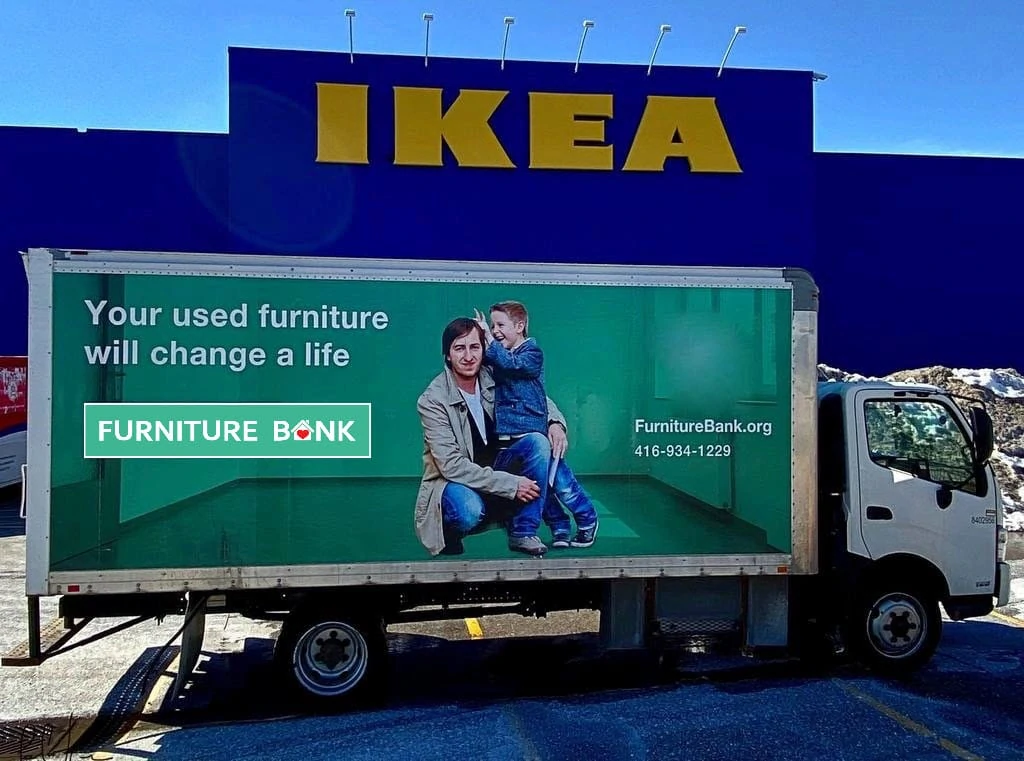
The Furniture Bank Toronto and IKEA Canada partnership did not begin with a proposal. It began in 2019 with two people meeting at Toronto’s Circular Economy Working Group — a sector forum, not a fundraising room — and recognising that one of them had mattresses to get rid of and the other could not get enough of them. If you are looking for where to find these conversations, it is at the waste and circularity tables in your city, not at charity events.
The shape of the pilot
The 2020 pilot ran across four IKEA stores in the Greater Toronto Area. The division of labour was simple and is worth copying directly:
- The retailer bags returned mattresses and stores them until collection.
- The charity assesses each unit, selects on usability, and redistributes what passes.
That split matters. Bagging at the store is what makes the units handleable and keeps the quality high enough to be worth collecting. If a retailer will not bag and store, your yield drops and your labour cost rises before a single mattress reaches a client.
The pilot worked, and expanded to all six GTA locations. That progression — four stores, then six, then a national frame agreement in 2023 — took four years.
What it produced
- 25,000 mattresses moved since 2019, an in-kind value of roughly $4 million
- 11,680 individuals and families furnished through the mattress reuse program
- 1,734 tonnes of CO2 emissions prevented
- Separately in Toronto, end-of-life kitchen cabinets from the same retailer became more than 1,000 kitchens for housing projects
In 2024 IKEA Canada committed a further $300,000 to extend the program to Ottawa, Montreal, Halifax and Winnipeg, with an additional $100,000 in the following year. The mattress supply position in Toronto moved from chronic shortage to regularly holding more supply than demand.
What it costs the charity
This is the part that does not appear in the press release, and the reason we are writing it up.
The retailer’s funding covered 45% of program costs. Furniture Bank covered the remaining 55%. A partnership that delivers $4 million of in-kind mattresses is still a net operating cost line, and it has to be planned for as one.
Alongside the money, the administrator role brought a standing workload:
- Due diligence on every participating charity in the network
- Training charity staff on handling and assessment standards
- Ongoing communication management with the retailer
- Monthly invoicing and quarterly reporting
- Building and maintaining web forms and the supporting digital infrastructure
- Compliance with the retailer’s own supplier standard — in this case IWAY, which Furniture Bank holds certification against
- Quarterly meetings with all stakeholders
And there was an opportunity cost that is easy to miss. The capacity that went into running a national program came out of the support services Furniture Bank had been providing to individual charities — operational guidance, platform access, coaching, call centre. Growing the national pipeline reduced, for a period, what could be offered locally. That is a real trade-off, not a footnote.
Questions to settle before you sign
What percentage of program cost is actually covered?
Ask for the number in writing and model the balance across the full term. In the IKEA Canada agreement the retailer’s funding covered 45% of program costs and the charity carried 55%. A three-year agreement you cannot fund in year two is worse than no agreement.
Who bags and stores the returned mattresses?
In the IKEA pilot the retailer bagged and stored returns at the store, and the charity collected, assessed and redistributed. If the retailer will not bag and store, your yield falls and your labour cost rises, so recost the whole arrangement before agreeing.
What happens to units that fail inspection?
A retailer pipeline delivers volume indiscriminately, so a share of every load will be unusable. Without a mattress recycler nearby or a disposal budget, those rejects become your cost. Some Furniture Bank Network members charge a disposal fee, others route rejects to a local recycler — see the seven supply routes for how members handle this.
Can you meet the retailer’s supplier standard?
Large retailers audit their suppliers, including charitable ones. IKEA requires compliance with its IWAY standard, and Furniture Bank holds certification against it. Certification takes time and somebody in your organisation has to own it.
Who owns the reporting?
Monthly invoicing and quarterly reporting is a named person’s job, not something an already-full operations role absorbs. Budget for the administration before the first load arrives.
Is it worth it?
On the evidence, yes. No other route moves 25,000 mattresses. Nothing else takes an organisation from chronic mattress shortage to surplus. And once a retailer has a working reuse channel, it tends to widen — the kitchen cabinet stream in Toronto came after the mattress relationship was already proven.
But it is an operating commitment with a funding gap in it, not a windfall. Go in with the 45% figure in your head and a plan for the other 55%, and it is one of the strongest moves available to a furniture bank. Go in expecting a donation and it will strain you.
Related
- Seven ways furniture banks increase their mattress supply — where retailer partnerships sit among the alternatives
- What does it take to build a full impact measurement system? — how to report a partnership like this to a funder
Source material: Furniture Bank Toronto’s write-ups of the IKEA Canada ESG partnership and the National Mattress Return Program. Figures are Furniture Bank Toronto’s own.