Mattresses are the most requested item at almost every furniture bank, and the hardest one to keep in stock. For most members, demand outruns supply every month of the year.
There is no single fix. Across the Furniture Bank Network, members use seven different routes to build mattress supply, and most run several at once. Here is what each one actually involves, and where each one breaks down.
1. Take gently used mattresses from the community
A good number of members do some version of this. For Goodness Sake (Bristol, CT) combines community donations with new mattresses from a local company, and still does not reach demand.

Quality is usually the reason it falls short. Project Home Again (Andover, MA) stopped taking used mattresses altogether because the standard was not there. A useful rule of thumb: if you would not let your mother sleep on it, do not accept it.
His Helping Hands (Wichita, KS) takes a different line, accepting all mattresses but charging a disposal fee on the poor-quality ones. Both His Helping Hands and The Mustard Seed of Central Florida (Orlando, FL) send what they cannot pass on to a local mattress recycler. If you have a recycler nearby, that changes the maths on accepting borderline units.
2. Fundraise specifically for mattresses
Buying new removes the quality problem entirely. Unrestricted funding does more for your organisation overall, but some donors want their gift to attach to something specific, and mattresses are an easy thing for them to picture.
Open Door Exchange (New York, NY) finds donors respond well to designating a gift this way. Cleveland Furniture Bank (Cleveland, OH) runs a Beds for Kids program funded largely by one annual appeal and one fundraiser, and puts more than 1,200 children a year into new beds through it.
3. Apply for grants earmarked for mattresses
Hope to Home Furniture Resource (Isle of Palms, SC) uses grant money specifically for children’s mattresses. Project Home Again combines grant funding with individual donations to buy at wholesale.
Which funders will take this depends entirely on your region, but a children’s-beds framing travels further with grantmakers than a general furniture ask.
4. Partner with local hotels
Most local businesses have furniture but no mattresses. Hotels are the exception.
Quality varies sharply by property. Hope to Home Furniture Resource works with high-end hotels, where mattresses are typically no more than two or three years old and have been protected with covers for their whole service life. Budget properties are rarely worth the truck.
5. Buy from a local mattress manufacturer
Not everyone has this option. Where a manufacturer is nearby, as with His Helping Hands, the per-unit price on seconds and overruns can be well below wholesale. Worth a phone call to find out whether one exists in your catchment.
6. Partner with a local furniture or mattress retailer
This is the one that changes the picture.
Most mattress companies offer a trial period with free returns. Retailers cannot resell a returned mattress, so it becomes a disposal cost for them and a landfill problem for everyone. Stepping into that gap solves their problem and yours at the same time.
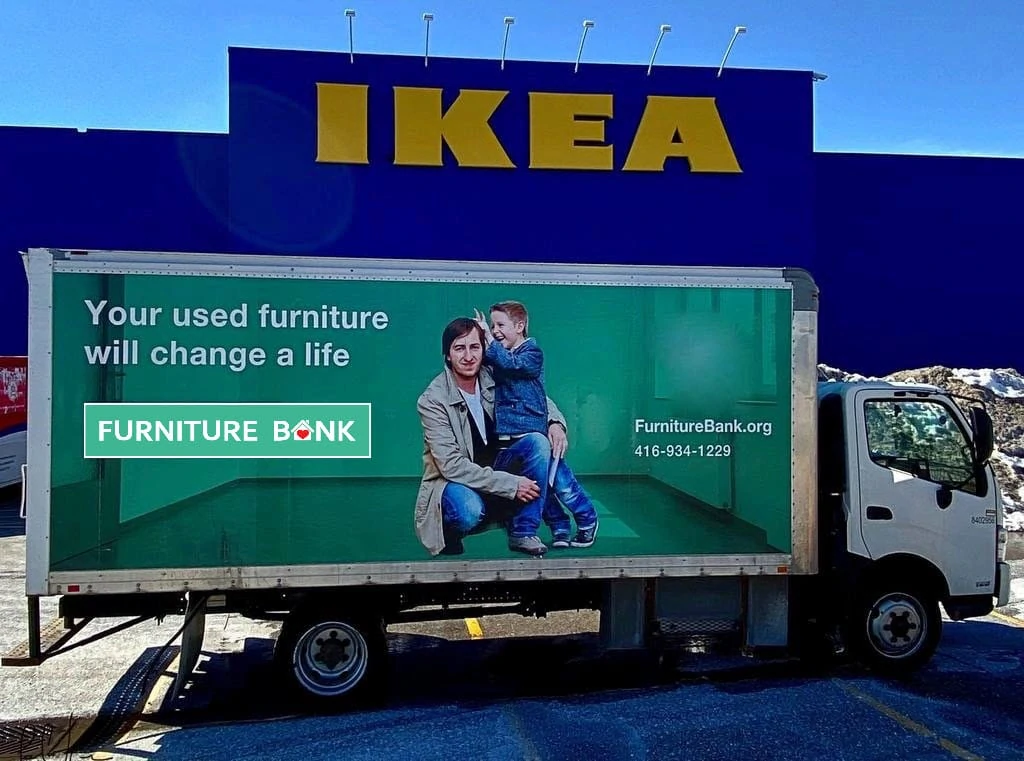
Cleveland Furniture Bank brings in three to four 53-foot trailers of mattresses a month through a partnership with the largest furniture retailer in its area. His Helping Hands uses retailer returns to supplement community donations.
It is also the route with the most administrative weight attached to it. We have written up how one of these arrangements works in practice, including what the charity ends up paying for: How a retailer mattress-return partnership actually works.
7. Work with online mattress and furniture retailers
The same logic as option six, with more volume behind it every year. Online furniture sales rose 191% in the early phases of the COVID-19 pandemic, and 20 to 25% of online purchases are returned. A direct-to-consumer mattress brand has no storefront to absorb returns, which makes them more motivated than a bricks-and-mortar retailer, not less.
Furniture Bank in Toronto built its mattress supply this way through partnerships with IKEA and Endy, to the point where supply now regularly exceeds demand.
In practice, you will run several at once
Very few members rely on one route. Community donations cover the base, a retailer relationship handles volume, and grant or donor funding fills the gap for new children’s beds where used simply will not do.
Before you give away a single mattress
Check your provincial, state and municipal regulations first. Cleveland Furniture Bank, for example, may only pass on mattresses sanitised to the standard its state law sets. The rules vary widely and the consequences of getting them wrong land on your clients as much as on you.
Where to go next
- How a retailer mattress-return partnership actually works — the full anatomy of option six, including cost
- What should a small furniture bank measure first? — start counting items delivered before you try to prove impact
Originally published on furniturebank.org in January 2022 and drawn from Furniture Bank Network member practice across Canada and the United States. Moved to the Network site in 2026, where it belongs.